
Optimizing APIs for LLM Agents: The Definitive Guide
Back in late 2023, our engineering team watched in sheer panic as our server metrics spiked dramatically in a mere six minutes. We braced for a massive DDoS attack. Instead, we found something stranger: a single, relentless autonomous AI agent trying to map out our legacy payment API. That wild morning shook us into a new reality. We were no longer writing code just for human eyes. What follows is the story of how we rebuilt our entire API setup and documentation to welcome both human engineers and machine consumers. Through a deep focus on AI agent integration, developer documentation SEO, and API discovery optimization, we crafted a setup that lets large language models find, decode, and run complex API calls with exceptional reliability and minimal human intervention.
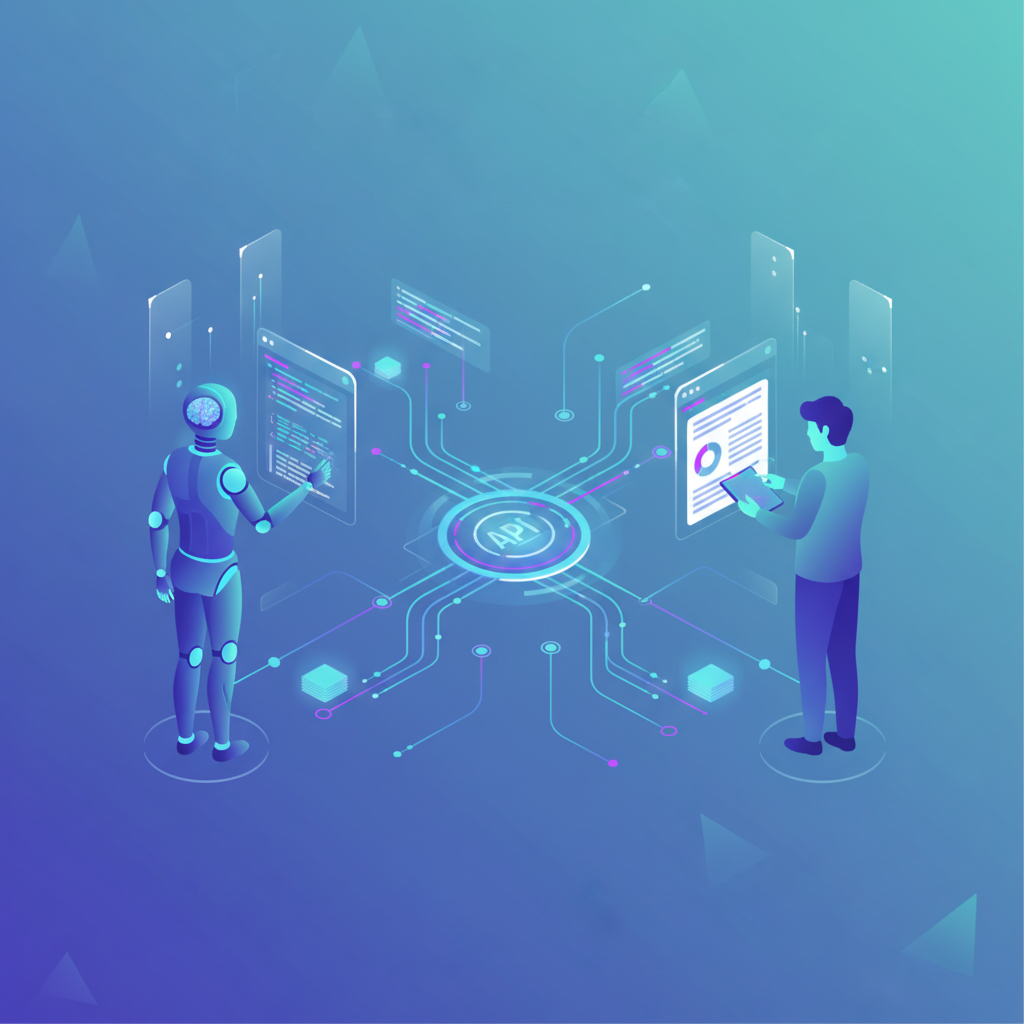
The Invisible Developer in the Server Logs
To grasp the depth of this shift, consider how an LLM agent navigates an API. A human developer takes their time, reads a guide, configures their environment, and writes code line by line. An AI agent does not. It acts as a hyper-fast, blind explorer. It wanders through an environment by making plans, picking tools on the fly, running them, watching what happens, and adjusting its route. When we dug into our logs from that chaotic morning, we found the exact moment things fell apart. The agent had hit an ambiguous endpoint named /get-data. A human engineer looks at the page layout and instantly deduces that they need to supply a user ID or a date range. The AI, operating purely on raw token probabilities, guessed wildly. It sent nested query objects that our server had no idea how to process. These errors triggered an aggressive retry loop in the agent’s code, unleashing thousands of broken requests in a flash.
That chaotic day taught us a harsh lesson. Traditional developer portals look pretty for humans, but the modern web demands APIs built for machine logic. We had to stop worrying about slick visual design and start focusing on absolute clarity of meaning. When an agent fails to comprehend an endpoint, it cannot open a support ticket. Instead, it gets stuck in a loop, freezes, or invents fake parameters, which drives up token bills and crushes server performance. To stop this cycle, we decided to treat artificial agents as our primary audience. Every endpoint had to explain itself, use strict structures, and offer a clear path forward.
Optimizing APIs for LLM Agents: Transforming OpenAPI Specs
Our journey started with a ground-up rebuild of our OpenAPI schemas. In the past, we treated these spec files as a tedious chore, auto-generating them from our backend code and leaving description fields blank. For a human, a parameter named status defined as a string is plenty. They use common sense or skim a quick table to know what to enter. To an LLM agent, an undocumented string is a black hole. We realized that designing for these models meant writing rich, explicit, and highly detailed explanations for every single field.
We loaded our schemas with strict rules and precise meanings. We spelled out the exact formats, the allowed lists of values, and what each parameter did in plain terms. We even used custom extension fields in our OpenAPI setups to feed execution rules directly to the AI models. When an LLM read our API during a tool-calling phase, it got a perfect set of instructions. Our metrics showed that these detailed schemas dramatically reduced validation errors and improved request reliability.
{
  "name": "transaction_id",
  "in": "query",
  "required": true,
  "schema": {
    "type": "string",
    "pattern": "^tx_[a-zA-Z0-9]{24}$",
    "description": "The unique cryptographic identifier of the transaction. Always starts with the prefix tx_ followed by exactly twenty-four alphanumeric characters. Example: tx_5f9b2c8d1e3a4f5b6c7d8e9f."
  }
}
With the exact regular expression pattern and a clear example right in the schema, the LLM stopped guessing. The model generated the correct format on its very first try, which made our system incredibly reliable.
Designing Documentation for AI Discovery and Search Engine Optimization
Our next task was making sure both human developers and AI systems could find our endpoints in the first place. This made search visibility and machine discovery our top priorities. Most classic developer portals are locked inside heavy JavaScript frameworks and single-page setups. They look sleek, but they are a nightmare for LLM web crawlers and AI search engines to scan.
We threw out the heavy JavaScript and moved our documentation to Astro, which generates clean, lightweight HTML that crawlers can read in milliseconds. We also rewrote our metadata to align with terms AI developers use. By using schema.org tags like WebAPI and TechArticle, we told search engines exactly what our endpoints did, how to call them, and where to find our test console. To help autonomous crawlers find us instantly, we placed a specialized file named llms.txt at our server root. This file serves as a modern version of robots.txt, giving LLMs a light, structured map of our entire setup. These upgrades drove a substantial surge in organic traffic from AI search engines and developer tools like Perplexity and ChatGPT.
Implementing Self-Healing Semantic Error Payloads
Even with flawless schemas, things will break. When they do, how an API handles the failure determines whether an AI agent freezes in its tracks or solves the issue on its own. In our old setup, a failed request spat out a generic error code and a brief text string. This was completely useless to a machine.
We rebuilt our error responses to offer helpful, machine-readable guidance. The new format highlights three key pieces of information: a clear error code, the exact validation rule that failed, and a perfect example of what a correct request looks like. This structure lets the LLM read the error, see where it went wrong, adjust its payload, and resubmit the call. This self-correcting design substantially reduced integration-related support tickets, as AI agents fixed their own mistakes in their execution loops. Human developers loved it too, since the detailed errors made debugging their own code incredibly simple.
{
  "error": {
    "code": "invalid_date_format",
    "message": "The start_date parameter must use the ISO 8601 extended format YYYY-MM-DD.",
    "remediation": "Please format your date string to match the pattern year-month-day, such as 2026-03-31.",
    "received_value": "03/31/2026"
  }
}
When the LLM agent gets this error, its reasoning loop reads the remediation field, formats the date correctly, and sends the call again. This entire fix happens in milliseconds. It keeps the system running smoothly without breaking the user flow.
Token Budgeting and API Response Efficiency
AI agents live and die by token limits and context windows. Every single character, space, and word our API sends back eats up tokens, slows down response times, and inflates the customer’s bill. We had to make our endpoints highly token-conscious.
We set up a flexible system that lets agents request only the specific fields they need. If an agent just needs to know if a package has arrived, it can ask for the status field alone. It no longer has to download a massive, seventy-line JSON object packed with coordinates and old timestamps. We also built a stripped-down, high-density version of our OpenAPI file. This version removes long, wordy tutorials while keeping the dense, descriptive rules needed for tool execution. Cutting down the size of our docs and API payloads significantly reduced agent latency, making our systems incredibly fast and affordable for automated workflows.
Real-World Business Outcomes of Machine-Optimized APIs
The real-world outcomes of these shifts blew past our wildest goals. Within six months, teams using AI assistants saw their onboarding times plummet from days to just minutes. Our platform quickly became the top choice for logistics companies building autonomous setups. One major partner linked their automated inventory database to our fulfillment system almost instantly without writing a single line of manual code. The AI agent found our endpoints, read the detailed schemas, verified its own payloads, and placed a live production order completely on its own.
Our total API traffic surged significantly, powered by autonomous systems running high-speed tasks for our clients. Despite the heavy load, our systems stayed remarkably quiet. Our structured schemas and self-correcting error responses stopped the wild loops and traffic spikes that hit us during our first encounter with AI agents. We showed that building for machines does not mean leaving humans behind. It raises the bar for everyone.
Key Takeaways for the Future of API Design
Moving from human-only guides to a machine-friendly developer portal showed us that preparing for LLM agents is a smart move for any modern engineering team. To thrive in this new landscape, developers should focus on a few key steps.
- Provide rich, clear descriptions for every OpenAPI parameter to stop agent hallucinations and ensure flawless tool execution.
- Build developer documentation using static HTML and schema.org metadata to boost search visibility and machine discovery.
- Provide rich, machine-friendly error payloads that let LLM agents self-correct and recover from mistakes on the fly.
- Watch your token budgets closely by offering selective field filtering and highly compressed schemas that fit easily inside tight context windows.
By adopting these steps, teams can ensure their platforms remain easy to use, highly reliable, and incredibly helpful for both human coders and the growing army of AI agents.